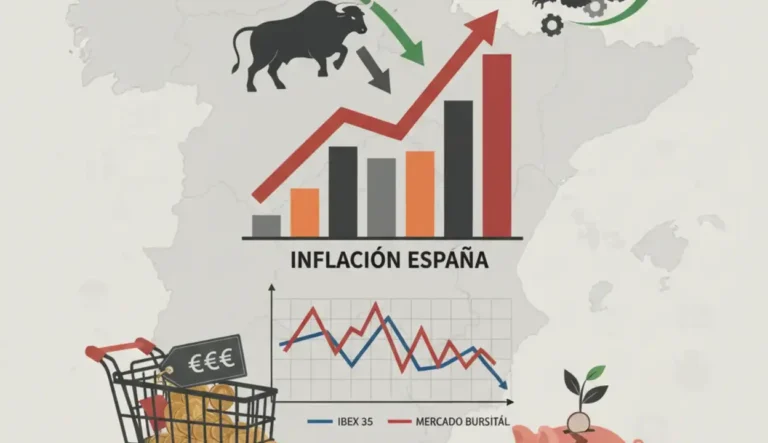
Current situation of inflation in Spain and its effect on salaries
Inflation in Spain closed 2024 with 2.8% annually, the lowest figure since 2020, reflecting a decrease after years of high inflation levels.
The impact on wages has been limited, with increases that have not fully offset inflation, eroding workers' purchasing power.
Inflationary moderation has not prevented families from facing pressures on their consumption due to the loss of purchasing power.
Inflation in Spain closed 2024 at 2.8%, the lowest since 2020
Average annual inflation in 2024 stood at 2.8%, reducing considerably compared to 3.5% in 2023 and previous very high levels.
This decline reflects the effectiveness of economic policies to contain price increases in key sectors of the Spanish economy.
The rise in fuel prices and some services drive inflation
The increase in fuel and electricity prices, together with the increase in tourist and health services, were basic drivers of inflation.
In addition, the increase in rents and the cost of basic products contributed to sustaining inflationary pressure during the year.
This inflation reduces the purchasing power and consumption capacity of families
Wage growth has not been enough to offset inflation, resulting in a real loss of purchasing power for Spanish households.
As a consequence, families have adjusted their consumption, prioritizing essential expenses and postponing important purchasing decisions.
Main causes of price increases in Spain
The general increase in prices in Spain during 2024 responds to several key factors that affect essential sectors of the national economy.
The increases are concentrated in energy, basic food, transportation and housing, sectors with a direct impact on the cost of living of households.
These combined factors explain the persistent inflationary pressure despite measures to contain it and the moderation observed in other sectors.
High electricity prices, with an increase of 18.7% in 2024
Electricity in 2024 experienced a notable increase that averaged 18.7%, affecting both domestic and business consumers.
Factors such as the rise in VAT, the volatility of the wholesale market and the increase in CO2 emissions prices drove this increase.
Increase in prices of basic foods
Prices of essential foods such as eggs, fruits, meat and dairy rose due to adverse weather factors and higher production costs.
The increase in the cost of energy, fertilizers, transportation and salaries increased the final cost, with increases in some products of more than 20%.
Climatic factors and production costs raise prices of fruits, eggs, meat and dairy products
Droughts, frosts and other extreme weather conditions reduced agricultural production, making the supply of fruits and other fresh foods more expensive.
High energy and labor costs increased expenses in all productive links, putting upward pressure on prices.
Increase in transportation and housing prices, with rents increasing by nearly 14%
Prices linked to transportation grew due to increases in tolls, fuel and rates, while housing showed increases in purchases and rents.
Residential rent rose to around 14%, although regulations limited the maximum legal rate of increase to 3% in 2024.
Impact of inflation on business competitiveness
The increase in operating costs due to inflation in 2024 has impacted energy and raw materials intensive sectors in Spain.
Companies face higher spending on supplies, which affects their profitability and ability to compete in national and international markets.
The increase in prices has eroded margins, limiting investment and generating risks in business continuity and growth.
Increased operating costs especially affect energy and raw materials intensive sectors
Sectors such as manufacturing, construction and agri-food suffer significant increases in prices of electricity, fuel and raw materials.
These increases increase the cost of production and logistics, putting pressure on profits and the pricing strategy.
Reduction of margins and difficulties in transferring costs without losing competitiveness
Companies find it complex to raise consumer prices without losing demand or market share to foreign competitors.
Global competition forces us to absorb part of the increase in costs, narrowing financial margins and limiting investment.
Digitalization and efficiency strategies become key to mitigating impacts
Adoption of artificial intelligence, analytics and automation helps optimize processes and reduce operating costs.
Training in digital skills and institutional support strengthen business productivity and resilience in the face of inflation.
Projection of the Spanish stock market towards 2026
The Spanish stock market projects moderate growth until 2026, impacted by stable macroeconomic conditions and accommodative monetary policies.
The IBEX 35 could reach around 17,950 points, reflecting progress supported by the expectation of sustained GDP and investment growth.
However, market developments will continue to be subject to volatility arising from global factors and specific to the business environment.
Moderate growth with the IBEX 35 close to 17,950 points in 2026
The IBEX 35 maintains a bullish but moderate outlook, with expectations that it will reach approximately 17,950 points in 2026.
This growth is driven by the gradual improvement of the Spanish economy and financial conditions that favor investment and investor confidence.
Positive scenario with macroeconomic stability although with geopolitical risks and the need for diversification
Spanish macroeconomic stability supports a positive stock market scenario, although there are geopolitical risks that could impact profitability.
It is recommended to diversify investments to mitigate possible adverse effects and take advantage of opportunities in varied sectors inside and outside Spain.
Monetary policy of the ECB and its influence on the Spanish economy
The ECB began a gradual cycle of interest rate reductions in 2024, seeking to control inflation and support growth in the eurozone.
This policy generates lower financing costs for families and companies in Spain, favoring consumption and internal investment.
The ECB's cautious approach seeks to balance price stability with moderate growth while maintaining a favorable financial environment.