Fundamentals of the circular economy
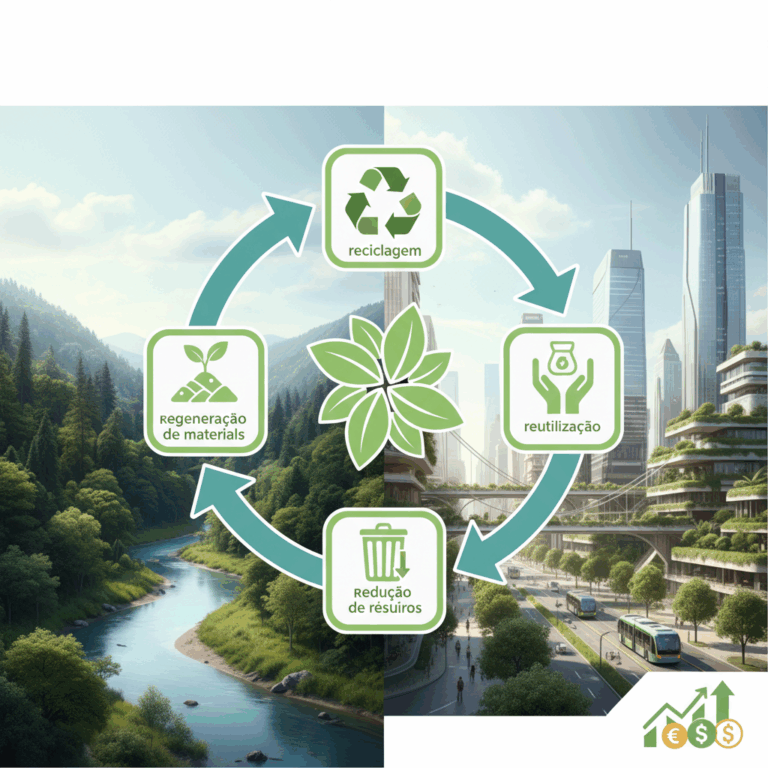
The circular economy it is a model that maximizes the value of resources and extends their useful life through reuse, recycling and repair, as opposed to the linear model.
This system provides clear environmental and economic benefits, reducing waste and pollution while optimizing costs and promoting innovation and job creation in sustainable sectors.
Concept and advantages of the circular model
The circular model seeks to keep resources in use for as long as possible, reducing the need to extract new raw materials, which favors environmental sustainability.
Advantages such as reducing waste, reducing polluting emissions and saving energy make it an efficient and beneficial system for the planet and companies.
Furthermore, this approach drives innovation, encourages job creation in green sectors and improves security in the supply of materials, reducing dependence on new resources.
Differences with the traditional linear model
The traditional linear model is based on the “extract, produce, consume and dispose of” scheme, generating a large amount of waste and environmental pollution.
In contrast, the circular economy promotes a closed flow of materials through repair, reuse and recycling, avoiding the loss of resources and reducing environmental impact.
This allows biodiversity to be conserved and pressure on natural resources to be reduced, improving economic resilience against fluctuations in the global market.
Environmental benefits of resource reuse
The reuse of resources in the circular economy plays a crucial role in improving the environment, reducing waste and protecting ecosystems.
This practice reduces pollution and preserves biodiversity, promoting more efficient and sustainable use of available raw materials.
In addition, it contributes to the mitigation of climate change by reducing polluting emissions derived from traditional production.
Reduction of waste and pollution
One of the main environmental benefits of the circular economy is the significant waste reduction that end up in landfills or the environment.
By reusing, recycling and repairing, waste generation is avoided and air, water and soil pollution is reduced thanks to less incineration and waste dumping.
This helps maintain healthy ecosystems and mitigates damage caused by extractive techniques and contaminants from the traditional linear model.
Preservation of biodiversity and savings of raw materials
Responsible consumption and reuse of resources protects natural habitats, preserving the biodiversity by preventing its degradation.
Reducing the extraction of raw materials reduces pressure on ecosystems and natural resources, prolonging their long-term availability.
In addition, a more efficient and conscious use is promoted, essential to conserve biological wealth and maintain environmental balances.
Interesting fact about biodiversity
Protecting biodiversity prevents the loss of species that are essential for vital ecological processes, such as pollination and natural pest control.
Reduction of greenhouse gas emissions
The circular economy contributes to the reduction of greenhouse gas emissions by minimizing the production of new goods and energy consumption.
Processes such as extraction and manufacturing are important sources of CO2; By reusing materials, this significant carbon footprint is reduced.
This change favors the fight against global warming and helps meet international climate sustainability goals.
Economic impact of the circular economy
The circular economy represents an economic opportunity by optimizing resources and reducing production costs, minimizing waste and dependence on new raw materials.
This model also strengthens security in the supply of materials, which protects companies from market volatility and global shortage situations.
In addition, it promotes job creation and stimulates technological and business innovation, promoting sustainable and resilient economic growth.
Cost optimization and security of supply
Reuse and recycling allow companies to reduce expenses on raw materials and waste management, increasing the efficiency and competitiveness of the business.
This approach reduces vulnerability to price fluctuations or supply interruptions, ensuring operational stability in times of crisis.
Thus, the circular economy increases the autonomy of industries, strengthening more sustainable and resilient value chains in the face of external challenges.
Employment generation and promotion of innovation
The transition towards a circular model creates new jobs in sectors such as repair, recycling and sustainable design, expanding the labor market.
This process encourages technological and business innovation, as companies look for creative solutions to maximize the use of materials.
Furthermore, the circular economy promotes a culture of continuous improvement and development of more durable products, boosting competitiveness and economic growth.
Perspectives and sustainability of the circular model
The circular economy model presents a promising future, focused on environmental sustainability and economic growth. The European Union promotes policies for its adoption.
The circular economy is expected to not only reduce environmental impact but also foster inclusive and resilient economic development, adapted to current challenges.
Economic growth and job creation according to the European Union
The European Union estimates that the circular economy can generate additional GDP growth by optimizing resources and creating new opportunities in green sectors.
In addition, hundreds of thousands of jobs are expected to be created, especially in areas of repair, recycling and sustainable technologies, driving innovation.
These jobs contribute to strengthening the local economy and resilience in the face of international crises, increasing security in the supply of materials.
Contribution to sustainable and resilient development
The circular economy promotes sustainable development by balancing economic growth, environmental care and social well-being, guaranteeing resources for future generations.
By reducing the extraction of raw materials and minimizing waste, the resilience of production systems in the face of global fluctuations and challenges is strengthened.
This model promotes responsible and collaborative practices that promote innovation, efficiency and adaptation to climate and economic changes.