Relationship between economic growth and employment
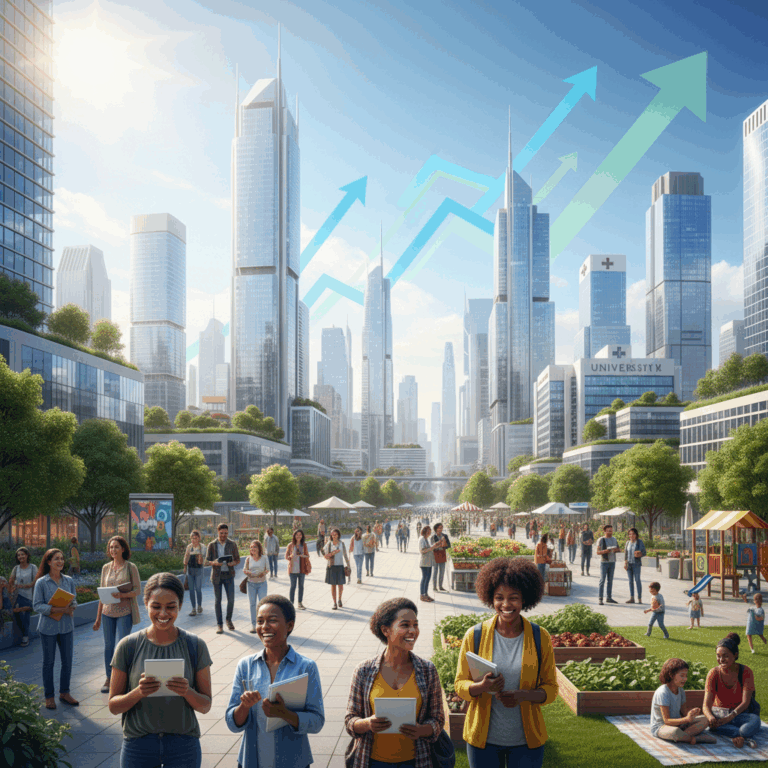
The economic growth it is key to job creation, since by increasing production, companies demand more labor. This drives the generation of new job opportunities for the population.
When the economy expands, investments and projects multiply, which in turn favors the incorporation of workers in different sectors. Thus, employment increases in volume and diversity.
The link between economic growth and employment is well documented, demonstrating that the increase in the Gross Domestic Product directly influences employment rates and reduction in unemployment.
Economic expansion and job creation
The process of economic expansion encourages the creation of new jobs, since companies need to increase their productive capacity to meet growing demand.
This generates direct and indirect job opportunities, benefiting both qualified and unskilled workers in different productive sectors.
International studies highlight that in consolidated economies, variation in employment is highly correlated with GDP growth.
Improvements in quality and job stability
In addition to generating employment, economic development drives improvements in the quality of jobs, increasing the proportion of permanent contracts and safer working conditions.
Labor reforms and wage increases contribute to greater stability, social protection and access to benefits, improving the quality of life of workers.
This advance translates into a more inclusive and stable labor market, where employees have greater security and opportunities for professional development.
Impact of economic development on income
Economic development directly drives the increase in income by expanding job opportunities and reducing unemployment, benefiting the majority of the population.
With higher incomes, families increase their purchasing power, which encourages consumption and generates a positive cycle that stimulates sustained economic growth.
Additionally, strengthening infrastructure and public services improves access to essential goods, raising the quality of life and social equity.
Increase in employment and reduction in unemployment
When the economy grows, more formal jobs are created that allow people to access regular and stable income, essential to reduce unemployment.
This increase in employment reduces inequality gaps and improves the economic security of families, contributing to social stability and community progress.
Economic expansion also stimulates varied productive sectors, facilitating job relocation and the inclusion of traditionally excluded groups.
Increase in purchasing power and consumption
As economic development grows, wages tend to rise, which increases the purchasing power of the population and its ability to purchase more goods and services.
This greater consumption boosts the economy, since it boosts production and investment, generating a virtuous cycle that benefits multiple sectors.
The increase in domestic demand strengthens the local market, contributing to the creation of jobs and the improvement of economic conditions.
Strengthening infrastructure and public services
Higher tax revenues from economic development allow governments to invest in essential infrastructure such as transportation, health and education.
These investments improve access to quality public services, facilitating social well-being and equal opportunities for the entire population.
Strengthening these areas also promotes a favorable environment for private investment and long-term sustainable development.
Contribution of economic growth to quality of life
The economic growth it goes beyond financial figures, as it improves general well-being by facilitating access to essential services such as health and education.
This process drives an increase in life expectancy and security, crucial factors that raise the quality of life of the population in a tangible and sustainable way.
Additionally, economic development creates an environment that fosters opportunities for personal and social progress, integrating more people into the benefits of growth.
Improvement in well-being and access to services
Sustained economic growth allows governments to increase investment in public services, improving access and quality of health and education.
These improvements directly contribute to the well-being of the population, by providing greater health care and educational opportunities for all sectors.
Likewise, economic expansion facilitates the creation of infrastructure that supports basic services, which reduces inequalities and promotes social equity.
Social inclusion and personal development
Economic growth fosters social inclusion by creating opportunities for vulnerable groups, promoting participation in the labor market and society.
This positively impacts personal development, since people access resources and tools to improve their abilities and quality of life.
Inclusive economic development strengthens social cohesion and promotes a fairer distribution of the benefits of progress, improving the overall quality of life.
Limitations and conditions for full development
The economic growth it is essential, but it does not in itself guarantee comprehensive development. Other aspects need to be considered to achieve sustainable and equitable progress.
Full development implies a real improvement in the quality of life, social justice and broad access to opportunities, aspects that require actions beyond the simple increase in GDP.
To achieve this, it is vital to understand the differences between growth and development, as well as the importance of policies that promote equity and long-term sustainability.
Difference between economic growth and development
Economic growth refers to the quantitative increase in production and wealth in an economy, generally measured by GDP. However, development involves qualitative transformations.
Development encompasses improvements in education, health, social equality and well-being, ensuring that the benefits of growth are distributed fairly among the population.
Thus, a country can experience high growth but lack development if it does not reduce inequalities or improve the living conditions of its citizens.
Importance of equity and sustainability policies
For growth to lead to full development, it is essential to implement policies that promote equity in the distribution of income and opportunities.
Likewise, environmental and social sustainability must be a priority, ensuring that economic progress does not compromise resources and future quality of life.
Relevant data on sustainable development
The United Nations emphasizes that the Sustainable Development Goals integrate economic growth with social justice and environmental care to achieve inclusive and lasting development.
These goals highlight the need to balance growth with the protection of natural resources and the inclusion of all social sectors, especially the most vulnerable.