Characteristics and fundamentals of non-fungible tokens
The non-fungible tokens (NFT) they are unique digital assets, registered on a blockchain that ensures their authenticity and ownership. Their uniqueness differentiates them from other digital assets.
These non-fungible tokens are indivisible and unrepeatable, each one has an exclusive identifier that guarantees its originality, similar to a unique and valuable work of art in the digital environment.
Definition and unique properties of NFTs
NFTs are digital assets that represent unique objects, impossible to exchange for others of equal value. Each one contains metadata and an identifier that makes it unrepeatable.
This uniqueness allows digital elements such as images, music or videos to have a certificate that guarantees their originality and ownership worldwide.
Since they are not fungible, NFTs they are not divided or replaced, an essential characteristic for the digital certification of virtual works and assets.
Blockchain technology and digital authenticity
The blockchain it is the base technology that ensures the authenticity of NFTs through decentralized records, impossible to alter, verifiable by any user.
Through smart contracts, property rights and transfers are managed, guaranteeing transparency and security in every transaction associated with the NFT.
This technology eliminates intermediaries, facilitating traceability and protection of property, which has revolutionized the way digital assets are traded.
Main uses of NFTs in different sectors
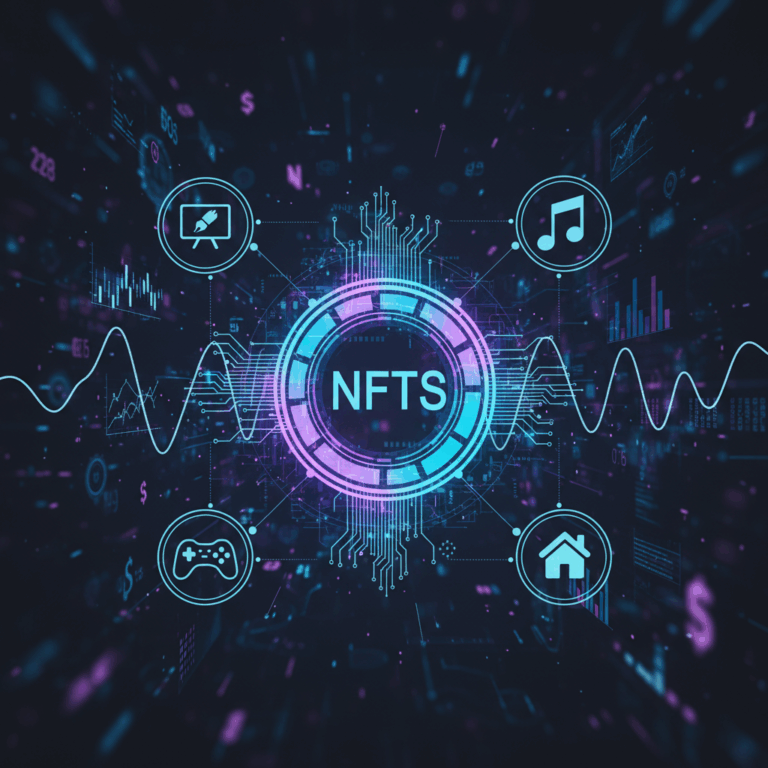
The NFT they are applied in multiple sectors, transforming the way of understanding digital property. Its use ranges from art to fashion.
These tokens allow the authenticity and exclusivity of digital assets to be certified, opening new opportunities for creators and consumers.
Digital art and collectibles
In digital art, NFTs give artists the ability to sell unique works with proof of ownership and verifiable provenance thanks to blockchain.
Digital collectibles, such as sports cards or trading cards, are gaining popularity by offering a transparent and secure marketplace for buying and selling unique pieces.
This sector has revolutionized the way we collect, eliminating intermediaries and ensuring that each asset is exclusive and inimitable.
Video games and virtual assets
NFTs in video games represent digital objects, characters or terrain, giving players real property and the possibility of trading outside the game.
This boosts the virtual economy, facilitating buying and selling between users and promoting personalization and investment in digital assets.
Blockchain technology ensures the rarity and uniqueness of these objects, changing the traditional gaming experience.
Music, audiovisuals and fashion
Musicians and audiovisual creators use NFTs to monetize limited editions and exclusive rights, establishing a new direct relationship with their followers.
In fashion, NFTs are used to certify physical products and create innovative digital experiences, increasing the value and exclusivity of brands.
This integration opens paths for events, digital merchandising and collaborations that link the virtual world with the real one.
Economic impact of NFTs on digitalization
NFTs have opened new avenues for the monetization of digital assets, allowing creators to sell directly without intermediaries. This disintermediation benefits both artists and consumers.
Furthermore, the digital economy has been transformed by these unique tokens, which facilitate secure and transparent transactions, boosting markets for intangible goods that are previously difficult to market.
New forms of monetization and disintermediation
With NFTs, creators can monetize digital works, licenses and exclusive content using blockchain. This reduces the need for traditional intermediaries, improving profitability.
Disintermediation also increases buyer confidence by ensuring authenticity and provenance, fostering a more direct and transparent marketplace between creators and users.
On the other hand, smart contracts automate payments and rights, facilitating innovative business models and new ways to generate income in the digital economy.
Risks and challenges of the NFT market
Despite its potential, the NFT market faces risks such as price volatility and speculation, which affect the stability of traded digital assets.
There are also challenges related to the energy consumption of some blockchains and the lack of clear regulation, which generates uncertainty and possible fraud in this emerging sector.
Likewise, the immaturity of the market causes many tokens to lose value quickly, evidencing the need for greater security and professionalization to consolidate the ecosystem.
Innovation and future of NFTs in the digital economy
NFTs continue to drive innovation in the digital economy, exploring new applications that redefine ownership and authenticity in the virtual world.
Its potential goes beyond art and collecting, creating significant transformations in digital identity and traceability, keys to future technological solutions.
Exploration in digital identity and traceability
NFTs are emerging as fundamental tools for digital identity management, offering secure and verifiable control over personal data in digital environments.
The traceability provided by blockchain allows the complete history of each asset to be recorded, increasing confidence and quality in the certification of products and services.
This feature also applies to digitally linked physical assets, making it easier to track and authenticate in supply chains.
Interesting fact
Emerging projects use NFTs to create unique digital passports and certificates, improving user privacy and sovereignty on online platforms.
These advances can revolutionize everything from access to services to the validation of educational or work credentials with immediate recognition.
Role of NFTs in technological evolution
NFTs drive technological evolution by integrating smart contracts with digital assets, allowing processes to be automated and creating new forms of economic interaction.
Their participation in web3 strengthens decentralization, promoting more open and collaborative digital ecosystems, where ownership is truly in the hands of the user.
This evolution opens scenarios for innovations such as augmented reality, metaverses and interoperable digital ecosystems, where NFTs will be key.