Definition and phases of the economic cycle
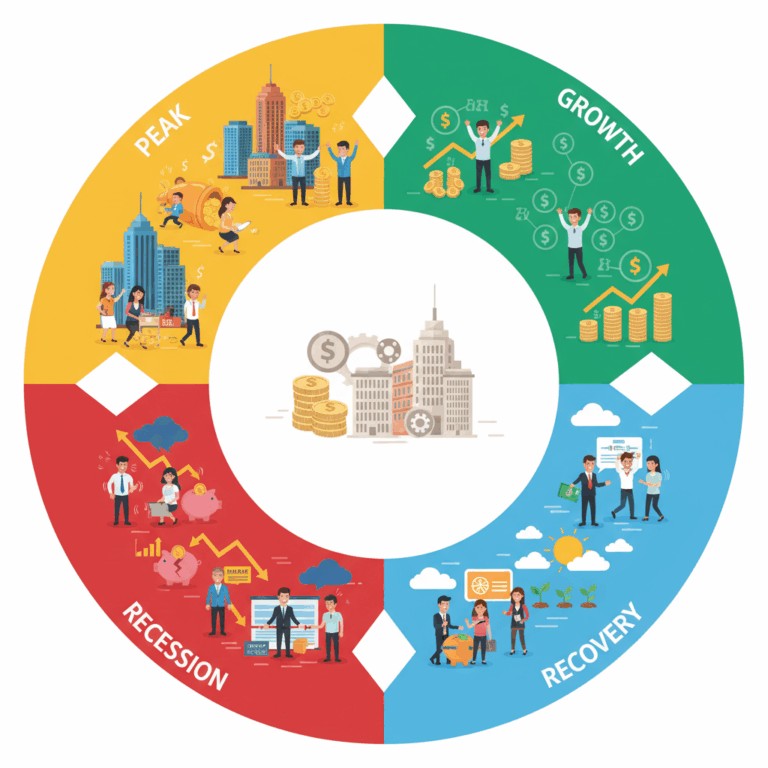
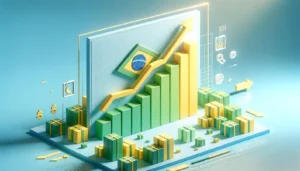
The economic cycle it is a recurring pattern that describes the fluctuation between the expansion and contraction of economic activity. Over time, economies go through these phases.
Understanding the business cycle is essential to analyze how these changes affect people's employment, production and quality of life. Its main phases are growth and recession.
Concept of the economic cycle
The business cycle refers to regular oscillations in economic activity, where periods of increase are followed by slowdowns. It is a natural dynamic in any economy.
These fluctuations affect variables such as production, employment and consumption, directly influencing the financial and social stability of a country.
This concept allows us to better anticipate and understand the causes and consequences of economic changes, facilitating the development of appropriate policies.
Main phases: growth and recession
The phase of growth it is characterized by a sustained increase in production, employment and consumption. It is a period of economic expansion and opportunities for the population.
In contrast, the phase of recession it implies a slowdown, with a drop in production, investment and an increase in unemployment, negatively affecting confidence and income.
Understanding these phases helps visualize how the economic cycle influences society, affecting both job stability and general well-being.
Characteristics of the growth phase
During the phase of economic growth, production and employment increase considerably. This period reflects expansion and dynamism in the labor market.
Growth drives the economy, generating greater job opportunities and promoting a favorable environment for investment and business development.
Increase in production and employment
The increase in industrial and service production is key in the growth phase. Companies expand their operations to meet growing demand.
This causes an increase in the hiring of workers, reducing unemployment rates and improving job stability in various sectors.
Greater production also encourages innovation and technological development, facilitating a positive cycle of economic progress.
Increase in consumption and salaries
The increase in employment leads to a growth in wage income, which increases the purchasing power of families and, consequently, the consumption of goods and services.
This cycle favors domestic demand, encouraging companies to continue investing and increasing their supply, which benefits the entire economy.
Higher salaries and greater access to credit strengthen consumer confidence, generating a positive and sustained effect on the market.
Improvement in quality of life
The combination of greater employment, salaries and consumption contributes to improving the quality of life of the population. An increase in social and personal well-being is observed.
Families have access to better services, education and health, which drives social development and reduces economic inequalities.
Interesting fact
Quality of life improves not only with higher incomes, but also with job stability and access to social benefits, creating a favorable context for sustainable growth.
Social impacts during the recession
The phase of recession it generates profound social consequences that affect both individual well-being and the general economic structure. This stage is critical for the population.
During the recession, job and economic opportunities decrease, causing a visible impact on the standard of living and financial stability of many families.
Decrease in investment and production
In the recession, a significant reduction in business investment is observed, due to uncertainty and lower demand in the market. This slows down economic activity.
The drop in production affects all sectors, generating a domino effect that reduces the supply of employment and limits the resources available for salaries and development.
This decline also decreases the capacity for future growth and hinders immediate economic recovery, creating an environment of caution in companies.
Increased unemployment and reduced income
One of the most visible impacts of the recession is the increase in unemployment, which increases economic insecurity and reduces the purchasing power of families.
Job loss generates wage cuts and reduces income, directly affecting quality of life and access to fundamental goods and services.
This situation generates social and economic stress, hindering family stability and increasing the vulnerability of already affected sectors.
Consequences of the economic cycle on people
The phases of the economic cycle have a direct effect on people's daily lives. Economic growth generates an environment of optimism and opportunities for personal and professional development.
On the contrary, the recession brings with it significant challenges that can affect the well-being and financial stability of families, increasing social vulnerability.
Optimism and growing opportunities
During growth, consumer and worker confidence increases. More jobs emerge and income increases, which favors investment in personal and family projects.
This positive environment allows people to plan for the long term, improve their quality of life and take advantage of new opportunities for education, employment and entrepreneurship.
Furthermore, a dynamic labor market strengthens social mobility and reduces poverty rates, benefiting society as a whole.
Challenges and risks in recession
In times of recession, uncertainty and fear of unemployment grow, generating stress and anxiety in the population. Reducing income limits consumption and savings capacity.
People face the possibility of losing their jobs or seeing their salaries reduced, which negatively impacts their quality of life and access to basic services.
This context forces many families to adjust their budget and look for alternatives to maintain their well-being, increasing social inequality and economic insecurity.